
When gay, lesbian or bisexual church members step out of the closet, some brothers and sisters may feel pastorally responsible, exhibit holy distress or an impulse to help: Is it not an integral part of Christian faith that God wants to make saints out of sinners and free them from sinful habits (John 8:34, 36)? That He can work miracles when earnestly asked?
This chapter, co-authored with Dennis Meier, is from the forthcoming book in German, queergedacht Beiträge für eine offene Diskussion über gleichgeschlechtliche monogame Beziehungen
Werner E. Lange, Dennis Meier, and Reinder Bruinsma, eds.
STAB-Verlag, Adendorf, Germany, 2023, 2nd ed. 2024.
Website: stab-verlag.com The English version, queer(in)sight, will be available in October 2024.
The train of thought seems plausible: if God sees same-sex relationships as sinful, He should be willing to show non-heterosexual people, who ask to be released from their feelings and actions, a way out, and help them to overcome their sin. Of course, it is part of the duty of Christian charity not to condemn those ‘affected’ and to protect them, to confront them with the oft-quoted ‘Go and sin no more’ from John 8:11, and to accompany them on their path to heterosexuality. Thus begins the history of the so-called change ministries, also known as reparative or conversion therapies, which have played a major role in our church.
The healer: Colin Cook
Until the 1970s, Adventist church leaders generally assumed that there were no gay church members. However, in December 1976, the Adventist youth magazine Insight published three articles entitled ‘God’s Grace for the Homosexuals’, written by former Adventist pastor Colin Cook. He had been dismissed from ministry in England a few years earlier because of homosexual promiscuity. He had then sought healing for his unwanted sexuality and eventually married. He worked as a counselor at the Green Hills Health Center for Health Care in Reading, Pennsylvania. In the articles, Cook remained silent about his personal experiences, but presented a way in which victory over homosexual behavior was possible. In response the editor received many letters. This brought the issue to the attention of the Adventist public. Cook wrote further articles for Insight, in which he emphasized the possibility of changing one’s homosexual orientation. He estimated the number of Adventists in the USA, who felt attracted to people of the same sex, at 10,000 to 20,000 and criticized the church for failing to offer them help. In 1978 he published a ten-hour series of lectures on cassette tapes entitled Homosexuality and the Power to Change. He presented himself as confirmation of what he was advocating: change in homosexuality. Cook’s counseling ministry grew to such an extent that in 1980 he founded the Quest Learning Center in Reading, Pennsylvania, and established self-help groups (Homosexuals Anonymous, HA for short) throughout the USA. By 1986 there were 60 such groups. This made Quest and HA the largest and best-known conversion program in the USA. Quest became an active member of Exodus International, an interdenominational umbrella organization for change ministries. Soon the Adventist church leadership decided to support Quest financially, contributing almost half of its budget. This made our church the first denomination to fund a change ministry for homosexuals. However, they made sure that the organization’s bylaws made no reference to the church, in order to be protected against possible legal consequences or claims for compensation. Adventist publications publicized the Quest HA program and presented it as the answer to homosexuality. Those affected in Adventist churches and SDA schools were referred to Quest. Ministry, the Adventist magazine for ministers, published a long interview with Cook in September 1981, in an issue that was sent free to thousands of ministers of other denominations. As Quest grew, it attracted considerable attention in the press as well as on television and radio talk shows and received support from conservative clergy of other denominations. Cook’s pamphlet Homosexuality: An Open Door? (1985) had already sold 45,000 copies by December 1986, a remarkable sales result for an Adventist publisher. Soon Cook was the ‘star’, considered by many in the Homosexuals Anonymous groups and Exodus International to be the model ex-homosexual. He was a prominent and frequent speaker at their annual conventions. The Adventist church leadership basked in the positive publicity that Cook brought them. But there never were studies on the effectiveness of the program or the experiences of the participants, nor were written reports requested. As a result, church leadership missed the fact that the reported healings were claimed but not empirically proven. Regarding his qualifications, Cook admitted in his taped talks that he had no formal training for his counseling ministry, but he referred to his experience with homosexuals who had become heterosexual, his own experience and the clinical work of Lawrence J. Hatterer (psychiatrist and author of Changing Homosexuality in the Male, 1970). Cook saw homosexuality as an abnormal behavior. He said that the cause was more spiritual than biological or environmental—an expression of alienation from God, as Paul portrayed it in Romans 1. Homosexual persons must ultimately accept responsibility for their own behavior and admit their need for help. Cook acknowledged that a homosexual desire often disappears only gradually and recommended entering into a relationship with a woman, even if it is initially friendly rather than sexual. He rejected the growing scientific consensus that sexual orientation is basically unchangeable. Cook (like many psychologists at the time) attributed the development of same-sex orientation to the unreciprocated love of the corresponding parent (i.e. the father in the case of boys), including his own father, a fisherman, who was hardly ever at home. This experience of deficiency resulted in a lack of identification with the absent parent and led to a distortion of reality, which the person sought to compensate for with the ‘false solution’ of same-sex love in promiscuous behavior, which ultimately acquired the character of addiction. Cook was of course familiar with unsuccessful prayer for deliverance from homosexual temptation. The answer, he said, is claiming Christ’s heterosexuality and seeking the need for love in relationship with Him (he advised imagining meeting Jesus naked in a garden). To this end, he recommended non-erotic relationships with the same sex, and his 14-point program (based on the 12-step program of Alcoholics Anonymous). However, unlike usual AA-meetings, there was no admission of one’s own situation (analogous to ‘I am an alcoholic’ at AA meetings). Point 6 reads: ‘We have learned to claim our actual reality: that we are a part of God’s heterosexual creation and that God has called us to recognize this identity in Him through Jesus Christ by faith.’ Cook had thus allowed his own biography to congeal into theology.
Cook’s exposure
Ronald Lawson, an Adventist sociologist and co-founder of SDA-Kinship International (more on this in chapter 19), himself gay, doubted the success stories of Quest. They did not tally with the experiences from his work with the members of SDA Kinship. As part of a sociological study on global Adventism, he interviewed 14 Quest participants (five of whom had been recommended to him as success stories by an enthusiastic Quest participant), two members of Homosexuals Anonymous groups and finally, after reviewing the Quest material, Colin Cook himself and two other ‘therapists.’ Lawson found that for many, participation in the Quest program had turned out to be a nightmare. They reported how, full of hope, they thought they had found a way out of their isolation and into a community of people with similar experiences. Instead of isolation, however, the pressure to succeed and change prevailed. They were caught up in a maelstrom of confusion and of facilitating sexual contacts between the participants. Cook’s therapeutical methods, in which he disregarded the boundaries of intimacy and focused on sexually and psychologically abusive traits, were particularly traumatizing. A regular part of the counseling sessions was a massage by Cook in which both he and the client were naked, accompanied by sexual arousal and repeated advances or sexual acts. Cook’s embraces, which could last up to 15 minutes in a tight embrace, were also notorious. Many noticed that Cook would be aroused. His telephone consultations often differed little from telephone sex dialogs because he placed great emphasis on the detailed description of sexual fantasies and activities. Some reported that he read out the descriptions of other clients that he had documented, and whose identity was poorly concealed, because they all knew each other. None of the interviewees stated that their sexual orientation had changed, nor did they know anyone for whom this had occurred. One of the interviewees said verbatim: ‘Nobody had changed . . . Many left embittered . . . For them, the feeling of not having moved on was heartbreaking. A lot of hopes were dashed.’ The interviews were painful and tearful because they sometimes re-traumatized the interviewees. 11 of the 14 interviewees had now accepted their same-sex orientation. Since sexual assault was involved, Lawson revealed this in October 1986 to General Conference President Neal C. Wilson in a 16-page letter. To make sure Wilson would not ignore the letter, Lawson sent copies to 29 other church leaders and academics. Cook admitted to the allegations, and within a week he was removed from his position as director of the Quest Learning Center, which was closed shortly afterwards. In the aftermath, several other participants contacted Lawson and confirmed Cook’s assaults. However, Adventist publications initially ignored the closure of Quest and the removal of its director, so the widespread reputation of the program as a solution to the problem of homosexuality remained uncorrected. In September 1987, eleven months later, Ministry published another long interview with Cook that, while pointing out irregularities, continued to promote its methods as the answer to the problem of homosexuality. In a caption, apparently inserted by mistake, it was announced that he would soon be offering seminars again. By December, Cook had regained enough confidence to announce that he had launched Quest II. In 1989, an article by Cook appeared in the evangelical magazine Christianity Today, in which he again claimed to have found ‘freedom’ from homosexuality. He increasingly gained the support of evangelical churches and the religious right in the USA. These, too, urgently needed a solution because of their rigorous rejection of homosexuality. In 1993, Cook moved to Denver, Colorado, where he launched another program, FaithQuest. It grew quickly and became known through collaborations with organizations such as James Dobson’s Focus on the Family. Cook was present in the media and frequently spoke at Adventist churches and colleges. Because church leadership had failed to inform church members about his machinations, Adventists continued to turn to him. Lawson’s interest in Cook’s work was rekindled when two of the new participants shared their painful experiences with him. One of them had recorded the telephone therapy sessions for personal use (over 50 hours) and reported renewed sexual and psychological abuse. To prevent further abuse, Lawson shared the new findings with the Denver Post newspaper. The newspaper carried out its own investigation and finally published a report on its front page. After that, FaithQuest went quiet. The Adventist Church leadership announced that it no longer had anything to do with Colin Cook and his counseling services. To make matters worse for Cook, his wife divorced him. This significantly reduced the public legitimacy of his program.
Coming Out Ministries
Various change ministries emerged around the turn of the millennium. However, change was no longer understood as a change in sexual orientation, but rather as an empowerment by God to lead an abstinent, yet fulfilling, life and to turn away from a destructive and promiscuous lifestyle. The best-known Adventist organization of this kind is Coming Out Ministries (COM). It was founded in 2010 by three men with an active gay past (in which negative childhood experiences played a significant role). A woman joined them a little later. Their approach is to share their personal biography with those ‘struggling with sexuality, identity or brokenness’ and to highlight Jesus as ‘the source of hope, healing and lasting victory’, according to their website. Conversion therapies are rejected, but the possibility of choosing a heterosexual life and getting married is an option (which one of COM’s leaders has chosen). The main concern of Coming Out Ministries, however, is sexual abstinence. COM holds seminars in Adventist churches and schools where the speakers tell their own life stories. These deal with wild promiscuity, drugs and alcohol consumption. They are portrayed as typical of gay men. As a result, many of those affected feel that they are forced into stereotypes and prejudices that do not correspond to the reality and experience of their lives, but on the contrary are hurtful and offensive. Since the message of COM theologically concurs and supports the statements of the church leadership, their ministry is repeatedly recommended by the General Conference leadership and its president. They were the only gay persons who took part in the General Conference’s 2014 Global Conference on Alternative Sexualities in South Africa, which was attended by 350 delegates from all divisions of the world church. Journey Interrupted, a documentary film released in 2016 that also tells their stories, received General Conference approval and was shown at the Autumn Council in September 2016. Since then, the film has been shown in many countries, and at the Generation of Youth for Christ (GYC) convention in December 2016, the North American Division pastors’ convention in January 2017, and Adventist Andrews University in March 2017. The stories of the three men of COM reflect the experiences of gay men several decades ago: cooped up in secrecy, living promiscuously, filled with self- hatred and guilt, so that turning to alcohol and drugs was the obvious choice. However, this experience is in no way representative of many LGBTIQ people—especially women—and can be disturbing, as many of them live legally, and openly, in committed same-sex relationships, and in some places have married. Undoubtedly, there are those who find fulfillment in sexual abstinence, and experience this path as a blessing for themselves. Once again, however, it can be observed that Christians may quickly succumb to the temptation of deriving obligatory behavioral instructions from personal biographies, to propose individual experiences to others as goals to be achieved, which may create longings that must remain unfulfilled. It is doubtful that sexual abstinence as a requirement is the ‘biblical’ solution for all LGBTQ Adventists—especially on the part of those who fail to meet this requirement, because they are not allowed to experience the biblical ‘It is not good that man should be alone’ in their own lives, or to claim it for themselves. It must be critically asked whether the demand for abstinence is actually biblical (see chapter 15), and whether it leads to overcoming and ‘victory’ or does not also lead some into the destructive spiral of feelings of guilt, notorious failure, self-hatred and prayers that are repeatedly unanswered. This probably also applies to two of the original three COM founders who have since left the organization.
Conclusion
The hopes for healing that many LGBTQ Adventists and Adventist church leadership had placed in the ministry of Colin Cook, with his Quest Learning Center and affiliated Homosexuals Anonymous groups, were dashed. Many of those seeking counseling were sexually exploited by Cook, and his own ‘healing’ was, to put it mildly, more of a wish than a reality. It was a desire that also drove the Adventist church leadership to become Cook’s renewed patrons, despite this failure and exposure, by giving him a platform through the interview in the widely read pastor’s magazine Ministry in 1979 and by helping him to resume his activities. In retrospect, it was a mistake with serious consequences for the victims. An apology to the victims of Cook’s psychological and sexual assaults is still awaited. Most Adventist churches and the church leadership continue to demand that the ‘good’ LGBTQ church member lives a celibate life. However, a look at the church-at-large is encouraging. More and more church members, pastors and teachers are developing an open mind towards LGBTQ Adventists and are taking a stand against discrimination within the church, while questioning the official interpretation of biblical texts and the content of official statements.
Questions for dealing with the topic in a study group
- What feelings and thoughts did you have when reading this chapter?
- How would you feel if your longings and feelings would trigger reflexes of regret and help in other people?
- If nothing changes through honest prayer with regard to your sexual orientation or concerning your ability to practice abstinence, does that mean that have you prayed for the wrong thing or prayed in the wrong way?
- Which would be the greater ‘success’: a change in sexual orientation or the ability to practice sexual abstinence?
- Why was Colin Cook’s ministry so attractive to the leadership of our church?
- What should the responsible leaders in the Adventist Church have done better?
- What should we make of the support of the leadership of our church for Coming Out Ministries and their leaders?
- What lessons can be learned from the history of conversion therapies on how to deal with LGBTQ people?
- Has your attitude towards LGBTQ people changed as a result of reading this chapter?

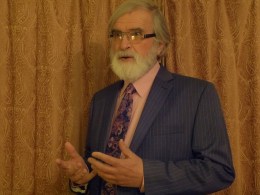
 Ronald L. Lawson Ph.D., Professor Emeritus, Queens College, CUNY